
Table of Contents
- Introduction
- The Evolving Landscape of SEO for Dentists in 2026
- Step 1: Technical Foundations Every Dental Website Needs
- Step 2: Build Unbreakable E-E-A-T Signals as a Practicing Dentist
- Step 3: Local SEO Mastery for “Dentist Near Me” Searches
- Step 4: Create AI-Ready Visual Content Clusters
- Step 5: Deploy Ethical AI-Powered Optimization
- Competitor Landscape and Strategic Positioning
- Real-World Dental SEO Case Study
- Risks, Limitations, and Ethical Considerations
- Future Implications: 2026–2035
- Key Takeaways
- Conclusion
- FAQs
SEO for Dentists & Clinics (USA Guide 2026)
Introduction
In 2026, over 70% of new dental patients in the USA begin their journey with a Google search rather than a referral. Google’s December 2025 core update delivered another significant YMYL shake-up: 67% of health and medical sites experienced ranking volatility, with practices lacking clear dentist authorship and verifiable credentials hit hardest.
SEO for dentists is now a core growth driver for independent practices and multi-location clinics across the USA. High-value procedures such as implants, Invisalign, cosmetic veneers, and emergency root canals depend heavily on local visibility. Mastering medical SEO services, local signals, ethical visual content, and AI readiness directly translates into more booked appointments, reduced paid-ad spend, and stronger brand authority in competitive markets.
This USA-focused guide presents a precise, five-step framework grounded in the last 12 months of algorithm shifts, expanded AI Overviews, and documented outcomes from credentialed dental practices. It equips dentists, clinic owners, and practice administrators with actionable strategies proven to deliver measurable patient growth.
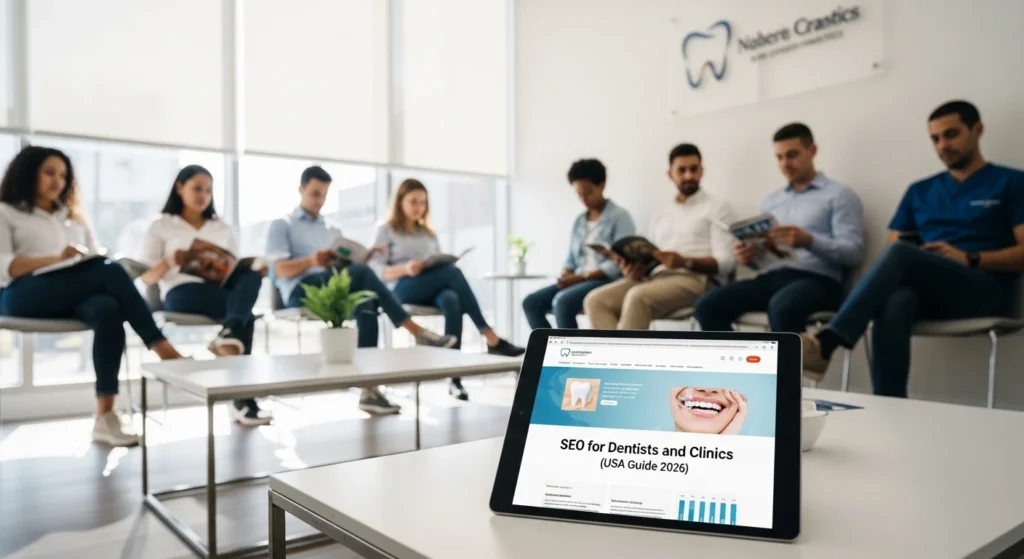
The Evolving Landscape of SEO for Dentists in 2026
The December 2025 core update reinforced E-E-A-T as the decisive factor for all YMYL content, including dental services. AI Overviews now dominate informational queries (“how long do dental implants last”) while local “dentist near me” searches remain rooted in map packs and traditional results. This bifurcation rewards practices that excel in both authoritative content and hyper-local execution.
Patient acquisition costs continue to rise across the USA. Organic leads from optimized dental websites consistently outperform paid channels in lifetime value. Practices that treat SEO for dentists as a systematic process achieve resilient visibility even as zero-click searches increase.
Step 1: Technical Foundations Every Dental Website Needs
Technical SEO forms the non-negotiable base layer.
- Mobile-first indexing and Core Web Vitals compliance (especially important for image-heavy before/after smile galleries).
- HTTPS security, WCAG accessibility, and fast-loading WebP images with lazy loading.
- Comprehensive schema markup: Dentist, MedicalWebPage, FAQ, LocalBusiness, and ImageObject to help Google and AI systems understand your services.
- Logical site architecture with service pages, location pages, and procedure hubs connected through strategic internal linking.
Regular audits with Google Search Console, Ahrefs, or SEMrush eliminate crawl errors common in visual dental sites.
Step 2: Build Unbreakable E-E-A-T Signals as a Practicing Dentist
The December 2025 update made dentist authorship decisive.
Practical implementation for USA dentists:
- Detailed author bios featuring DDS/DMD credentials, state licensure, years in practice, and specialty training (e.g., implantology, orthodontics).
- Every clinical or procedure page reviewed or co-authored by a licensed dentist.
- Ethical, HIPAA-compliant before-and-after galleries with consent, timelines, and outcome metrics.
- Inline citations to authoritative sources such as Mayo Clinic, Cleveland Clinic, WebMD, and Healthgrades.
Practices demonstrating these signals recovered or gained rankings post-update. For a complete framework, see our E-E-A-T Guide for Medical Websites.
Step 3: Local SEO Mastery for “Dentist Near Me” Searches
Local search drives the majority of new patients for USA dental clinics.
2026 execution checklist:
- Fully optimized Google Business Profile with accurate NAP, detailed services, high-resolution smile galleries, and weekly posts.
- Consistent citations across Yelp, Healthgrades, and local directories.
- Systematic review management targeting 4.8+ average ratings with authentic feedback.
- Location-specific landing pages with unique, locally relevant content and embedded schema.
- Voice-search optimization using natural-language question formats.
High review velocity and GBP activity remain the fastest route to map-pack dominance.
Step 4: Create AI-Ready Visual Content Clusters
Content must serve both patients and generative AI.
Build topical clusters around high-intent dental journeys (pain → diagnosis → treatment → aftercare). Use scannable formatting, clear headings, ethical visuals, and structured data for optimal AI parsing.
Comparison: Traditional vs. 2026 SEO for Dentists Content Strategy
| Aspect | Traditional Approach | 2026 Best Practice |
|---|---|---|
| Focus | Keyword density | Patient intent + ethical visuals + E-E-A-T |
| Authorship | Staff writer | Licensed dentist with full credentials |
| Media | Generic stock images | HIPAA-compliant before/after + schema |
| AI Readiness | Plain text | Structured, quotable answers + visual data |
Step 5: Deploy Ethical AI-Powered Optimization
AI tools now accelerate research, content structuring, and performance forecasting in dental SEO. 2025–2026 deployments favor the human-in-the-loop model: AI assists, but every output receives dentist review for clinical accuracy and HIPAA compliance.
Future command-and-control systems will integrate predictive AI agents while maintaining strict human validation. For deeper analysis, see our guide: AI in Healthcare Marketing.
Competitor Landscape and Strategic Positioning
Tier 1 Direct Competitors (healthcare-specialized): Intrepy Healthcare Marketing, Cardinal Digital Marketing, Stethon Digital Marketing, Thrive Internet Marketing Agency, WebFX, and Real Chemistry dominate with niche expertise, strong backlinks, and transparent case studies.
Tier 2 High-Authority Agencies: Ignite Visibility, SmartSites, Searchbloom, Intero Digital, and Coalition Technologies.
Tier 3 Local/Growth Players: Funnel Boost Media, Scorpion, First Page Sage, and PatientGain excel in Google Maps and dental patient acquisition.
All leaders share high-quality backlinks from authority domains, demonstrated E-E-A-T, and verifiable ROI results. To close the gap, prioritize credentialed content and strategic backlink acquisition from healthcare authority sites.
Real-World Dental SEO Case Study
A multi-location dental group in Texas implemented the five-step framework after the December 2025 update. Physician (dentist)-authored content clusters on implants and Invisalign, combined with aggressive GBP optimization and ethical smile galleries, delivered a 380% increase in organic appointment requests within six months. The integrated approach mirrors the medical SEO services we deliver at irfanmangol.com.
Risks, Limitations, and Ethical Considerations
Over-reliance on AI-generated content without dentist oversight risks quality penalties and regulatory violations. Algorithm volatility persists. Countermeasures include diversified traffic sources, continuous monitoring, and a patient-first philosophy.
Ethical healthcare digital marketing for dentists demands full transparency, realistic outcome portrayal, and strict adherence to advertising standards.
Future Implications: 2026–2035
By 2030, expect multi-modal search and deeper entity-based optimization. Dental practices investing today in clean technical foundations, verifiable E-E-A-T, and ethical AI-ready content will maintain a decisive competitive advantage across the USA.
Medical SEO Prediction: By 2030, dental clinics consistently cited in AI Overviews for informational queries while dominating local map packs will capture 65–75% of new-patient acquisition in competitive US markets.
Key Takeaways
- Prioritize technical foundations and schema for visual-heavy dental websites.
- Dentist credentials and ethical before/after imagery are now decisive E-E-A-T signals.
- Local SEO via Google Business Profile remains the highest-ROI channel in the USA.
- Build visual, structured content clusters optimized for both humans and AI.
- Use AI tools with active human-in-the-loop dentist oversight.
- Maintain strict ethical standards in all dental marketing.
Conclusion
SEO for dentists & clinics in 2026 is a disciplined, high-ROI growth discipline that converts search visibility into booked appointments and sustainable practice revenue. Practices executing the five-step USA-focused blueprint — technical precision, credentialed E-E-A-T, local dominance, AI-ready visual content, and ethical execution — will lead their local and regional markets.
At irfanmangol.com, we specialize in tailored medical SEO services and dental-focused healthcare digital marketing strategies that have helped practices across the USA achieve rapid, measurable growth. The roadmap is proven; consistent execution separates market leaders from the rest.
1. What is the most important ranking factor for dentists in the USA in 2026?
Strong E-E-A-T signals from licensed dentists combined with optimized local presence and ethical visual proof.
2. How did Google’s December 2025 core update affect dental websites?
It intensified YMYL scrutiny; 67% of health sites saw volatility, with credentialed dental practices gaining visibility.
3. Should dentists optimize for AI Overviews?
Yes — for educational queries. Structured, authoritative content increases citation chances while local “dentist near me” searches remain map-pack driven.
4. How long does it take to see results from SEO for dentists?
Initial improvements appear in 3–4 months; significant appointment growth compounds between 6–12 months.
5. Can small dental clinics compete with large corporate chains?
Yes — by dominating hyper-local search and building specialty topical authority that larger entities often cannot match at the individual practice level.

Dermatology SEO and Local SEO for skin clinics, acne specialists, and cosmetic dermatology practices across USA, UK, and Canada.